You’ve finally arrived in paradise, but your body feels anything but. After hours folded into an airplane seat, you’re likely dealing with a stiff neck, a sore back, and tight legs. Before you dive into your Bali adventure, taking just 10 minutes for a few simple stretches after a long flight can make a world of difference, helping you feel refreshed and start the process of beating jet lag.
Why Your Body Hates Long Flights (And How Stretching Helps)
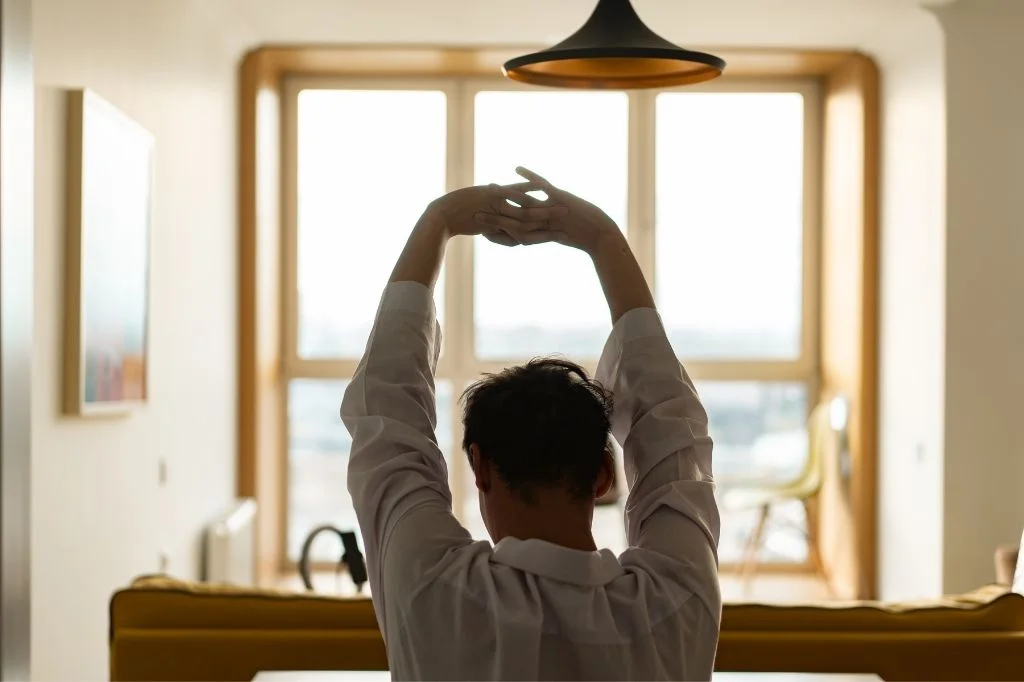
In simple terms, sitting for prolonged periods causes your muscles—especially your hips, hamstrings, and lower back—to tighten up and shorten. At the same time, your circulation slows down, which can lead to swelling and that heavy, sluggish feeling. Gentle stretching is the perfect antidote. It helps “wake up” your muscles, release built-up tension, and get your blood flowing freely again.
Your 5-Step Post-Flight Stretching Routine
Find a small space in your hotel room or villa and move through these gentle stretches. Remember to breathe deeply and never force a movement to the point of pain.
1. Cat-Cow Stretch (For a Stiff Spine)
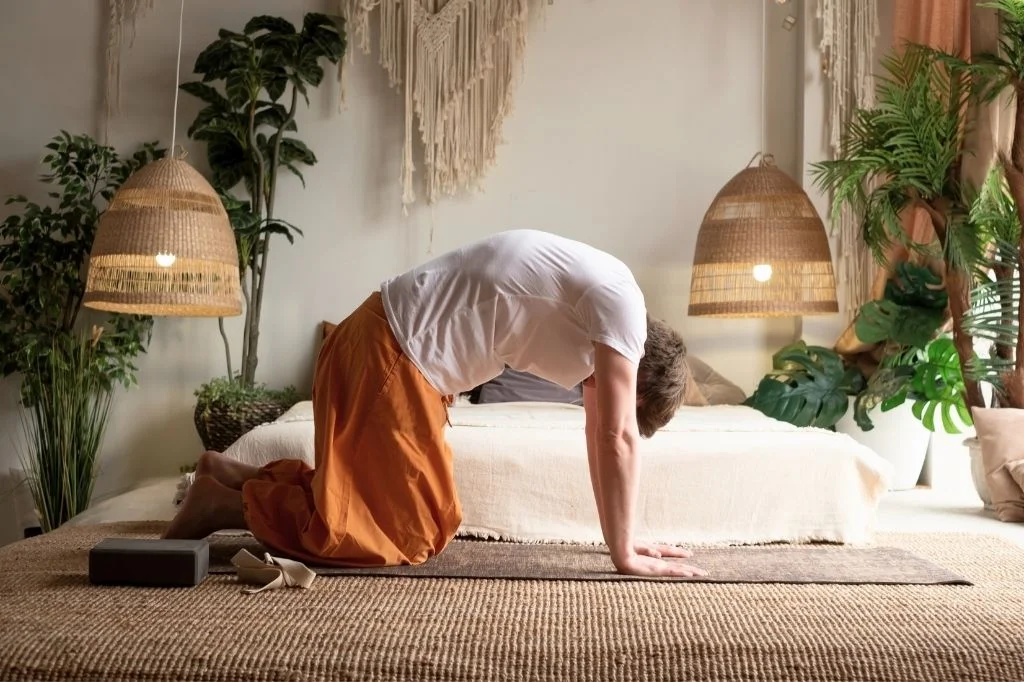
This dynamic stretch is fantastic for mobilizing a spine that has been locked in one position for hours.
- Start on your hands and knees, with your wrists under your shoulders and your knees under your hips.
- Inhale as you drop your belly towards the floor, lifting your chest and tailbone to create an arch in your back (Cow Pose).
- Exhale as you press into your hands, rounding your spine up towards the ceiling and tucking your chin to your chest (Cat Pose).
- Continue flowing between these two poses for 8-10 breaths.
2. Standing Forward Bend (To Release Hamstrings & Lower Back)
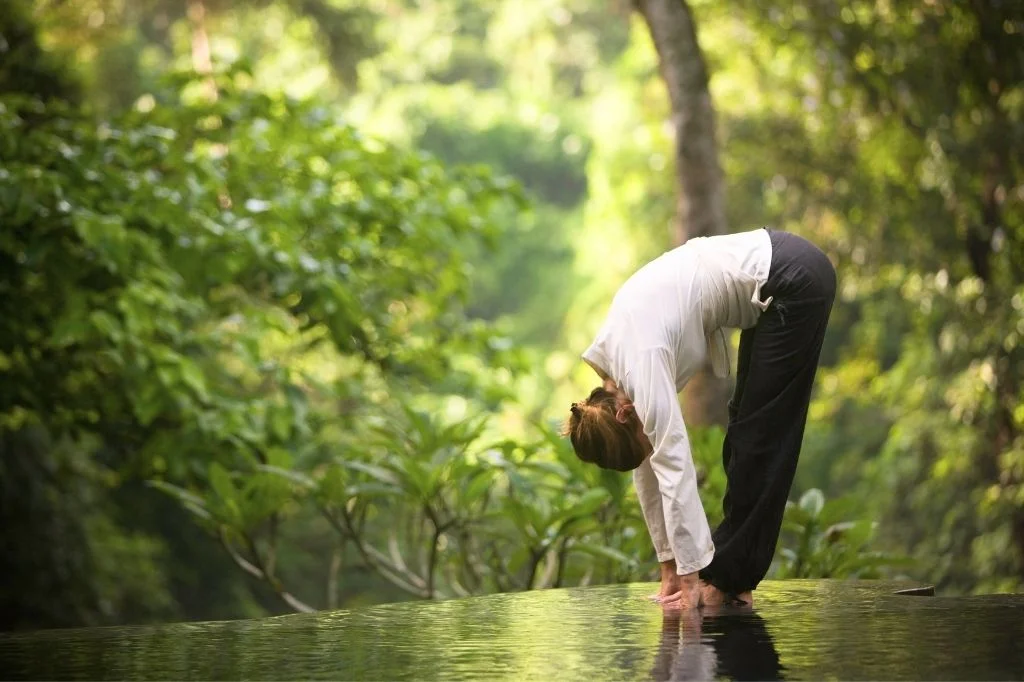
This releases tension all the way down the back of your body, a common area for jet lag stiffness.
- Stand with your feet hip-width apart.
- Exhale and hinge forward from your hips, keeping your back as straight as possible.
- Bend your knees generously. This is key to protecting your lower back. Let your head and neck hang heavy.
- Hold for 30 seconds, or about 5-8 deep breaths, feeling a gentle release in the back of your legs.
3. Chest Opener at a Wall (To Counteract Slouching)
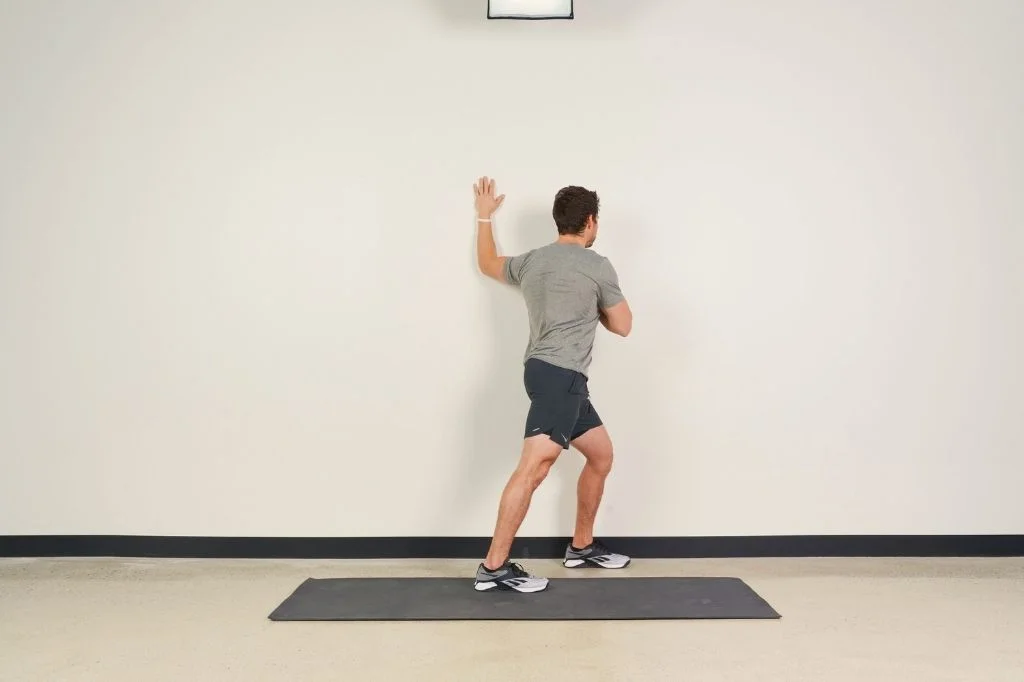
Airplane seats encourage slouching. This simple stretch uses any wall in your room to open up your chest and shoulders.
- Stand facing a wall, about an arm’s length away.
- Place your right palm flat on the wall at shoulder height, with your fingers pointing up.
- Gently turn your body to the left, away from the wall, until you feel a comfortable stretch across your chest and the front of your shoulder.
- Hold for 30 seconds, then switch sides.
4. Seated Figure-Four Stretch (For Tight Hips)
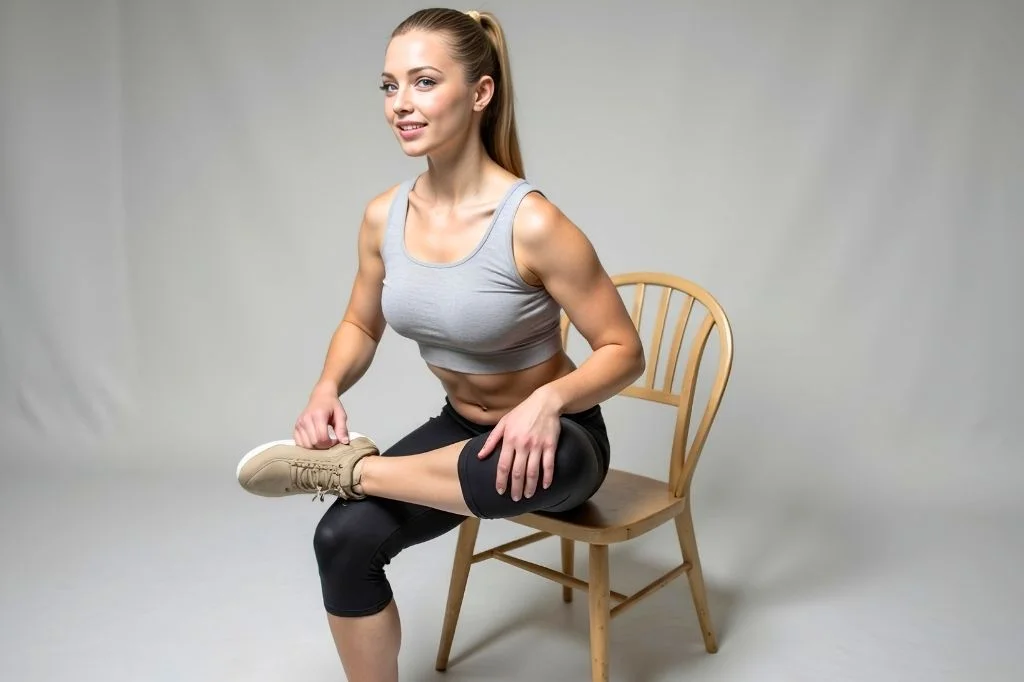
Your hips and glutes work hard to keep you stable while sitting. This stretch gives them a much-needed release.
- Sit on the edge of a chair or your bed with your feet flat on the floor.
- Cross your right ankle over your left thigh, just above the knee. Your right leg should form a “figure four” shape.
- Keeping your spine straight, gently lean forward until you feel a stretch in your right hip and glute.
- Hold for 30 seconds, then switch sides.
5. Legs-Up-the-Wall Pose (To Reduce Swelling)
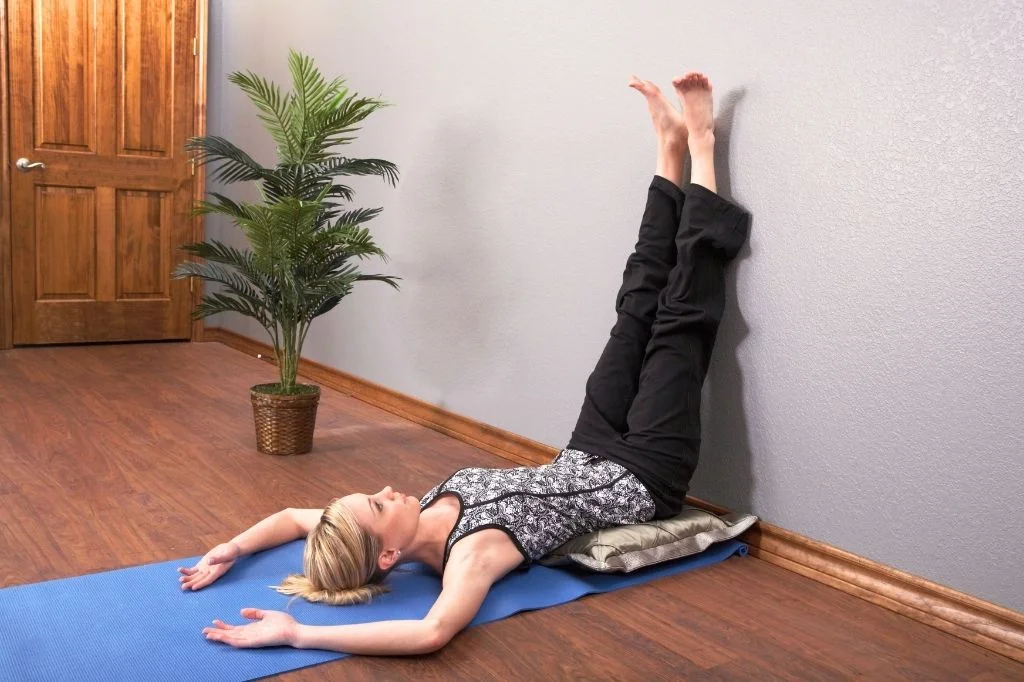
This is a wonderfully restorative pose that helps reduce swelling in tired feet and ankles by reversing the effect of gravity.
- Find a clear space of wall. Sit on the floor with one hip against the wall.
- Gently swing your legs up the wall as you lie back onto the floor.
- Shuffle your hips as close to the wall as is comfortable. Let your arms rest by your sides.
- Close your eyes and relax here for 3-5 minutes, breathing deeply.
Final Thoughts: Welcome to Bali, Refreshed
Congratulations on taking a positive step to care for your body after a long journey. By releasing travel tension, you’ve set yourself up for a more comfortable and enjoyable start to your Bali vacation. This simple routine is also a great foundation for anyone interested in starting a daily yoga practice. Now, go enjoy that beautiful island view, refreshed and free of stiffness.
Frequently Asked Questions about Jet Lag Stiffness
How long should I hold each stretch?
Aim to hold each static stretch for about 30 seconds, or for 5-8 deep breaths. For dynamic stretches like Cat-Cow, repeat the movement 5-10 times.
Should I stretch before or after a shower?
Stretching after a warm shower is ideal, as the heat helps to relax your muscles, allowing for a deeper and safer stretch.
Is it okay if I can’t stretch very far?
Absolutely. The goal is to feel a gentle release in your own body, not to force yourself into a specific shape. Never stretch to the point of pain.
Can I do these stretches on the plane?
Some gentle movements like neck rolls and ankle circles are great for the plane, but these specific stretches are best done after you land when you have more space.
What if a stretch hurts?
Stop immediately. Pain is your body’s signal to back off. Ease out of the stretch gently. You should only feel mild tension, never sharp pain.
How many times should I do this routine after arriving?
Doing it once right after you check-in is great. Repeating it again before bed or the next morning can also be very beneficial to shake off any remaining stiffness.
Besides stretching, what else helps with flight recovery?
Hydration is key! Drink plenty of water. Also, a short, gentle walk can do wonders to get your circulation moving again.
Will this routine help with jet lag?
While it primarily targets muscle stiffness, gentle movement and mindful breathing can help reset your body clock and reduce the stress associated with jet lag.
I have a bad back. Are these stretches safe?
It’s always best to consult your doctor or physical therapist before trying new exercises. Stretches like Cat-Cow and Legs-Up-the-Wall are generally very gentle, but listen to your body.
Is it better to stretch slowly or quickly?
Always move into and out of stretches slowly and deliberately. Bouncing or making jerky movements can lead to muscle strain.